Small2_sis_in_3d_printing-cover

Selective Inhibition Sintering (SIS) is an additive manufacturing (3D printing) process that offers an alternative to more conventional powder-based metal or polymer sintering techniques like Selective Laser Sintering (SLS). Developed by researchers (notably at the University of Southern California), SIS seeks to produce parts by inhibiting sintering (or melting) in certain regions, rather than directly sintering or melting all regions via high-energy sources (lasers, electron beams, etc.). What is SIS in 3d printing? In simpler terms, in SIS you deposit a base powder (metal or polymer), then selectively apply an inhibitor over the areas you don't want to sinter. Afterwards, you subject the whole thing to a sintering furnace (heat), which fuses the non-inhibited regions to form the final solid object, while the inhibited regions remain loose or non-sintered, acting as sacrificial or “support” material. After sintering, the loose material can be removed, leaving the desired geometry.

How SIS Works — The Process Steps Here is a breakdown of the steps involved in SIS: 1. Powder Bed Preparation A layer of base powder is spread onto a build bed. The powder could be metal, polymer, or ceramic. The properties of the powder—particle size, sintering temperature, flowability—are critical. 2. Selective Inhibitor Deposition Over that powder layer, an inhibition agent (sometimes delivered via an ink-jet printhead) is deposited. The inhibitor is applied only to regions where you do not want the powder to sinter during the sintering step. The geometry of the inhibitor pattern corresponds to the “outside” or unwanted powder regions.  This inhibitor can be a liquid solution (e.g. sucrose + surfactant, or other chemical) in early polymer/metal versions.  For ceramics, dry powder inhibitors are also used (because high sintering temperatures can make liquid inhibitors impractical). 3. Layering / Repetition Additional layers of base powder are added, and inhibitor gets applied in each layer as needed, building up the 3D part. The shape of the inhibitor region between the region to be sintered and the surrounding powder forms essentially a temporary mold or shell/moat. 4. Sintering The whole build — including both inhibited and non-inhibited regions — is placed in a furnace and heated to the sintering temperature of the base powder. Because inhibited regions have been treated (or coated) to prevent or slow down sintering (or require a higher temperature than is provided), only the non-inhibited powder fuses into a solid component. 5. Post-Processing / Removal of Loose Powder After sintering, the inhibited (non-sintered) powder, which did not fuse, remains loose or only weakly bound. This powder is removed (e.g. by brushing, sand-blasting, or simple mechanical removal) leaving the final object. 6. Finishing As with other metal/ceramic sintered parts, depending on required tolerances and surface finish, additional finishing steps (machining, polishing, possibly secondary sintering or annealing) may be needed. SIS’s output depends on the fidelity of the inhibitor deposition, powder characteristics, and sintering behavior.

Why “Inhibition” Instead of Direct Fusion? SIS inverts some of the typical approach in powder sintering / fusion processes. Most conventional powder bed fusion (PBF) or sintering-based AM methods use a heat (laser, electron beam, or other) to selectively fuse or melt the powder in target regions (for example SLS for polymers, Direct Metal Laser Sintering (DMLS) for metals, etc.). SIS instead selects where not to fuse by applying an inhibitor, which means that: • Only the “negative” space (the region outside the desired part) needs to be defined explicitly via inhibitor deposition rather than “flooding” the whole powder bed with energy except in unwanted zones. • The energy source (sintering furnace) can be relatively simple compared to precise lasers or beam systems. • Potentially lower cost, simpler hardware, and maybe better scalability for larger parts, because the challenge of focusing and scanning a beam is replaced with an inhibition mechanism + furnace sintering.

Advantages of SIS over Traditional Methods Selective Inhibition Sintering offers a number of potential benefits, particularly for certain applications or use-cases. Some of the key advantages are: 1. Lower Equipment Cost Because the process does not require high-power lasers, scanning optics, or electron beams for selective melting, the hardware cost can be significantly reduced. The sintering furnace, controller, powder spreader, and inhibitor deposition mechanism are simpler in many respects. 2. Potential Speed Gains for Certain Geometries Since only the part boundary (i.e. inhibitor deposition) needs precise patterning, and the interior of the part is just base powder, there may be less work per layer, potentially speeding up deposition for large solid volumes. 3. Material Efficiency / Waste Handling The use of loose powder in non-inhibited regions means that the same base powder is being used for both part and surrounding material; only the inhibited powder (or inhibitor) is sacrificial. If managed properly, this can reduce some of the complexity of removing support structures or worrying about over-spray or beam width effects. 4. Scalability for Larger Parts As the part size increases, laser or beam systems often need more energy, face issues of focus, heat diffusion, scan path, etc. SIS avoids some of those drawbacks because the sintering happens more uniformly in a furnace rather than by scanning. 5. Flexibility of Materials SIS has been explored not only for metals and polymers but also ceramics. For ceramics, applying an inhibitor helps in creating viable green parts and then sintering. This can avoid some of the complexity of binder-based ceramic AM or laser sintering ceramics, which can suffer from high energy, warpage, and other defects. 6. Simplified Support / Shape Boundaries Because the inhibitor effectively defines the “outside”, support structures or over-hangs might be handled in new ways, possibly reducing the need for adding physical supports in some cases. The loose powder outside inhibited regions acts somewhat like a support until removed.

Challenges, Limitations & Technical Hurdles Like any emerging technology, SIS also faces material, processing, and design challenges that must be addressed before it can be widely adopted. Some of these are: 1. Inhibitor Material & Effectiveness  The inhibitor needs to sufficiently prevent sintering or melting in treated areas without interfering with desired regions.  It must have stability under sintering temperatures (i.e. either a higher sintering/melting point, or otherwise not degrade).  For liquid inhibitors, issues like over-penetration (inhibitor seeping beyond intended boundary), diffusion, and residue must be managed.  For ceramics or higher temperature sintering, liquid inhibitors often become ineffective or problematic; dry powder inhibitors are one possible solution but bring their own handling issues. 2. Resolution & Precision  The fidelity of the final part depends heavily on how accurately the inhibitor can be deposited. Any misalignment, overspray, or blur will degrade the boundary between the sintered part and non-sintered powder.  Powder particle size also matters: larger particles reduce resolution; very small particles are more expensive, more difficult to handle, more prone to agglomeration or flow issues. 3. Shrinkage & Distortion  Sintering processes usually cause shrinkage; parts may deform. The presence of non-sintered envelopes or boundaries defined by inhibitors introduces additional complexity in predicting how the final geometry will result.  Uniform heating in furnace vs localized sintering may still cause temperature gradients, warpage, or defects if not well controlled. 4. Post-Processing of Loose Powder / Cleanup  Removing inhibitors and non-sintered powder cleanly may be difficult, especially in fine features or internal cavities.  The leftover powder may be contaminated by inhibitor, which could complicate reuse of powder or recycling. 5. Material Cost & Powder Handling  Some powders (especially metal or ceramic powders) are expensive, sensitive (oxidation, moisture), and pose health/safety issues. Handling large amounts safely, or reusing powder, is nontrivial.  The inhibitor itself has to be managed, stored, and disposed of appropriately. 6. Thermal Management  Sintering temperatures for metals/ceramics are high; thermal gradients, furnace uniformity, and heating rate control are all critical.  The inhibitor’s thermal profile must be well known to ensure it behaves as expected (i.e. remains non-sintered or at least not fused) during heating. 7. Throughput / Cycle Time  Although SIS promises some speed gains, the overall process (powder spreading, inhibitor deposition, furnace sintering, post removal) may still be relatively slow for certain applications compared to fast PBF systems (for thin/layered parts).  Cooling time, sintering dwell time, and post-processing add to total production time. 8. Software & Process Control  You need good software to convert CAD to instruction layers for both powder and inhibitor deposition.  Proper control of deposition, environmental conditions (e.g. temperature, humidity), and monitoring is necessary.

Applications and Use Cases While still largely research-stage in many respects, SIS has potential (or demonstrated) applications in several fields: • Metal 3D Printing for Cost-Sensitive Use SIS could allow production of metal parts with lower capital cost machines, enabling smaller firms or labs to do metal AM with less expensive equipment. • Ceramic Parts Fabrication Ceramics are hard to print via traditional techniques without extensive post-processing. SIS offers ways to make complex ceramic parts with less need for binders or extremely high-energy laser sintering. • Large Structural Components For large parts where lasers/EB machines have issues (power, focal accuracy, scanning speed), SIS may offer a route to scalable production. • Prototyping / Research Early prototyping of metal/ceramic shapes where cost or equipment availability is limited. • Space / In-Situ Manufacturing Some works mention SIS being particularly interesting for in-space or off-Earth manufacturing (lunar regolith, etc.), since available raw materials could be used, and simpler equipment might be more feasible.

Research Highlights & Case Studies Some interesting studies and results include: • The original SIS development for polymers and metals by Khoshnevis et al., which demonstrated that SIS can produce high-quality parts and promised disruptive potential for metal AM. • SIS applied to ceramics: in “Selective Inhibition Sintering for ceramics,” the research shows using dry powder inhibitors (e.g. magnesium oxide, aluminum oxide) to delimit the sintering boundaries. Preliminary experiments showed feasible separation of parts from redundant powder and usable mechanical properties. • Tests using lunar regolith simulant: studies have explored SIS as a way to manufacture building/landing-pad tiles in space environments using in-situ resources. The idea is the base powder being something like lunar regolith simulant, and using an inhibitor (of higher sintering point) as the boundary. After sintering, parts are separated from the uninhibited (non-sintered) powder.

Practical Considerations When Using SIS For anyone thinking of using or developing a SIS process, here are practical points to pay attention to: 1. Powder Selection and Preparation  Particle size distribution: fine, uniform powders help with resolution and uniform sintering.  Cleanliness: no moisture, contaminants. 2. Inhibitor Design  Chemistry: effective inhibition without interfering with base powder.  Delivery mechanism: inkjet heads, spray, or nozzles for dry powder.  Thickness and fidelity: minimal over-penetration; sharp boundaries. 3. Sintering Furnace Design / Thermal Control  Uniform temperature distribution.  Proper heating and cooling rates to reduce thermal stresses. 4. CAD / Layering / Slicing Software  Must support the dual-material/layer deposition: base powder + inhibitor patterns.  Must be able to generate inhibitor “shells” or boundary paths accurately. 5. Post-Processing & Purity  Removal of non-sintered powder and inhibitor.  Surface finishing and any required densification. 6. Quality Control & Testing  Tests for density, mechanical properties (strength, toughness).  Dimensional accuracy vs. CAD model.  Material composition (to ensure no unwanted residual inhibitor contamination). 7. Safety & Handling  Powder handling safety (especially metals, ceramics).  Inhibitor materials: chemical safety, disposal.  Thermal equipment safety.

Limitations & Open Research Questions While promising, SIS has not yet become a widespread industrial standard. Key open questions include: • What is the long-term mechanical performance (fatigue, toughness) of SIS parts compared to fully laser fused ones? • How fine can the resolution be pushed (both in boundary sharpness and internal feature detail)? • Can inhibitor materials be standardized, cost-effective, and easily applied at scale without compromising performance? • How efficiently can uninhibited powder / loose powder be recycled or reused? • What are the limits in terms of part size, complexity, overhangs, internal channels, etc.? • What are the economics when considering full process cost (powder + inhibitor + furnace + post-processing) vs conventional PBF or other AM methods?

Future Prospects Given its advantages and challenges, here are some likely areas for future development of SIS: • Advanced Inhibitor Materials & Deposition Systems Better inhibitors that are reliable, less costly, easy to deposit accurately, perhaps self-limiting, maybe even smart inhibitors responsive to temperature. More precise deposition hardware (improved inkjet, spray, or powder nozzle systems). • Hybrid Processes Combining SIS with other AM methods; for example, using SIS for bulk volume or structure, then using laser sintering or other techniques for finer detail or finishing. • Application-Specific Use Cases Industries where cost reduction for metal/ceramic AM is very desirable: aerospace, space exploration, architectural ceramics, large manufacturing, maybe construction. • Supply Chain & Material Ecosystems Better powders, better inhibitor supply, better recycling of powders, standardization of process materials to reduce cost and variability. • Automation & Digital Control Improved process monitoring, closed-loop control of temperature, inhibitor deposition, furnace atmosphere etc. to ensure consistent parts. • Regulatory & Certification For critical parts (medical, aerospace), SIS parts will need to prove their reliability, structural integrity, and reproducibility.

Conclusion Selective Inhibition Sintering (SIS) is an intriguing and potentially disruptive technology in the additive manufacturing landscape. It offers a different route to produce metal, polymer, and ceramic parts, by inverting the typical “selective fusion” approach and instead using selective inhibition to define where sintering should not occur. This can lower equipment complexity, potentially reduce costs, and offer scalability advantages, particularly for larger parts or those made from ceramics. However, SIS is still a developing technology. Its success in industrial adoption will depend on solving challenges around resolution, inhibitor materials, thermal management, powder reuse, and overall process economics. But given the research to date, SIS is a strong candidate for future growth, especially in sectors where traditional metal/ceramic 3D printing is costly or impractical.

0 Comments 1 Vote Created

GMTA Software Solutions Pvt Ltd, Web & Mobile App Development 2 months ago

The success of a rental business depends on having the right car rental app features, which customers love. GMTA Software builds apps that are feature-rich with advanced functionalities, such as instant booking, push notifications, easy payment options, and tracking your vehicle in real time. Our car rental mobile app development allows you to book cars anytime, anywhere, with just a few clicks. We create apps that are fast, secure, and user-friendly. GMTA Software provides you with a feature-rich app to stay competitive in the rental business.

0 Comments 1 Vote Created
Small2_mobile-app-development

In today’s fast-evolving digital landscape, businesses are seeking reliable partners to keep up with disruptive technologies like Artificial Intelligence (AI), Machine Learning, and the Internet of Things (IoT). An application development company plays a crucial role in this transformation by delivering customized solutions that align with modern industry needs. From mobile-first strategies to cloud-native applications, these companies are helping enterprises adapt to changing user demands while ensuring scalability and security.

The current shift toward AI-powered apps, predictive analytics, and immersive user experiences highlights the growing demand for innovative software solutions. With industries embracing automation and personalization, businesses that invest in future-ready applications will stay ahead of competitors. Whether it’s enhancing customer engagement or streamlining operations, development companies are at the forefront of shaping the next wave of digital innovation.

Contact Us- +1-708-515-4004

Website- https://www.debutinfotech.com/

E-mail- info@debutinfotech.com

0 Comments 1 Vote Created
Small2_biggest_wholesale_toy_store_in_dubai

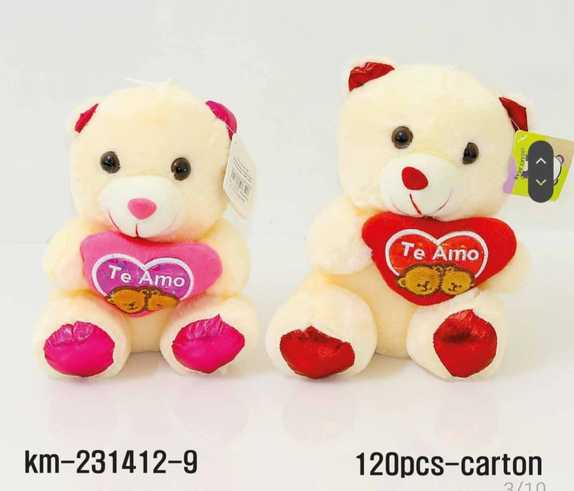
Dubai has long been recognized as a hub for commerce, trade, and entertainment, and when it comes to toys, the city boasts some of the most expansive and diverse collections in the region. Among these, the Biggest wholesale toy store in Dubai stands out as a true destination for retailers, collectors, and enthusiasts alike. This store offers an unparalleled variety of toys, ranging from classic educational playthings to the latest in high-tech gadgets, ensuring that every age group and interest is catered to. What makes this wholesale haven exceptional is not only its size but also its commitment to quality, affordability, and variety. Whether you are a retailer looking to stock your shelves or a parent seeking unique gifts in bulk, this store provides a one-stop solution that reflects Dubai’s position as a global center of trade and innovation. Its strategic location, vast inventory, and seamless buying experience make it an essential stop for anyone involved in the toy industry in the UAE. The Biggest wholesale toy store in Dubai is more than just a retail space; it is an immersive experience where customers can explore thousands of products under one roof. Each aisle is meticulously organized, making it easy to navigate through a wide range of categories such as action figures, dolls, plush toys, puzzles, board games, outdoor toys, and seasonal novelties. The store's layout emphasizes accessibility, allowing buyers to quickly identify and compare products, ensuring efficient bulk purchases. Additionally, the store frequently updates its inventory to reflect current trends and popular franchises, giving customers access to the latest toys as soon as they hit the market. For businesses, this is a significant advantage, as staying ahead in the competitive toy market often depends on quick access to trending products. The Biggest wholesale toy store in Dubai therefore serves as both a marketplace and a trend hub for the toy industry. One of the defining features of the Biggest wholesale toy store in Dubai is its pricing strategy, which ensures that customers benefit from competitive rates without compromising on quality. Bulk purchasing options allow retailers to maximize profit margins while enjoying discounts that make large-scale acquisitions feasible and cost-effective. The store also emphasizes transparent dealings, clear labeling, and detailed product descriptions, ensuring buyers know exactly what they are getting. Beyond toys, the store often includes accessories, educational kits, party favors, and seasonal decorations, providing a comprehensive inventory that meets the diverse needs of businesses and schools. This level of variety and affordability has made it a preferred choice for many buyers across the UAE, turning it into an essential landmark for anyone in the wholesale toy industry. Beyond its vast collection and competitive pricing, the Biggest wholesale toy store in Dubai prides itself on customer experience and support. The staff is well-trained to guide buyers, offer recommendations, and facilitate smooth transactions for bulk orders, making the shopping process both efficient and enjoyable. For international buyers, the store often provides shipping and logistics assistance, allowing seamless export of toys to different markets. The combination of variety, affordability, and exceptional service ensures that this store maintains its position as the largest and most trusted wholesale toy destination in Dubai. It is not just a place to buy toys; it is a cornerstone of Dubai’s toy trade ecosystem, supporting businesses, schools, and individuals with an unmatched inventory and expertise.

0 Comments 1 Vote Created

Maventouch: Your Go-To Partner for Promotional Gifts and Printing Services in Dubai In the bustling city of Dubai, businesses are constantly looking for innovative ways to stand out and make a lasting impression. At Maventouch, we specialize in providing high-quality promotional gifts and printing services that help businesses achieve their marketing goals. Best Promotional Gifts Printing Company in Dubai As the best promotional gifts printing company in Dubai, Maventouch offers a wide range of customizable products that can be tailored to suit your business needs. From branded merchandise to corporate gifts, our promotional products are designed to help businesses build brand awareness and foster customer loyalty. Best Promotional Gifts Printing Dubai At Maventouch, we pride ourselves on being one of the best promotional gifts printing companies in Dubai. Our team of experts works closely with clients to design and produce high-quality promotional gifts that reflect their brand's unique identity. Whether you're looking for customized mugs, pens, or bags, we've got you covered. T-Shirt Printing Service Dubai Our t-shirt printing service in Dubai is perfect for businesses looking to create custom apparel for their employees, events, or marketing campaigns. We use high-quality materials and advanced printing techniques to produce vibrant and durable prints that last. Quick Offset Printing in Dubai For businesses that require high-volume printing, Maventouch offers quick offset printing services in Dubai. Our state-of-the-art offset printing technology enables us to produce large quantities of prints quickly and efficiently, without compromising on quality. Digital Printing UAE At Maventouch, we're experts in digital printing in the UAE. Our digital printing services offer a range of benefits, including fast turnaround times, high-quality prints, and cost-effectiveness. Whether you're looking for business cards, brochures, or posters, our digital printing services are perfect for your needs. Why Choose Maventouch? • High-quality products and services • Experienced team of experts • Fast turnaround times • Competitive pricing • Wide range of customizable products Contact Us If you're looking for a reliable partner for your promotional gifts and printing needs in Dubai, contact Maventouch today. Our team is dedicated to providing exceptional service and support to ensure that your needs are met. Let's work together to create something amazing!

0 Comments 1 Vote Created

Hi everyone,

Lately I’ve been diving into GPU performance testing, especially for shader-heavy graphics (fractals, ray-marching, etc.), and I found a free online tool called Volume Shader BM Benchmark that I think is pretty useful.

Here’s what I liked about it:

Runs right in the browser with WebGL, no install needed.

Lets you tweak things like resolution, shader iterations, step size so you can push your hardware.

Gives detailed metrics like frame rate & frame time, plus lets you share a link so others can reproduce your exact settings.

The presets (Ultra Low → High) make it easier to compare different devices without manually tuning everything.

If anyone’s looking to compare GPUs, test rendering stability, or just see how different graphics cards handle heavy shader loads, this is worth trying. Curious if others have used it—how did your GPU hold up?

0 Comments 1 Vote Created

Hi everyone,

I often work with hours and minutes, and sometimes it gets confusing when I need to calculate totals or compare time spans. I recently came across Time-to-Decimal Converter, which instantly turns regular time into decimals (for example, 2 hours 30 minutes → 2.5 hours).

It seems really handy for quick math, spreadsheets, or even tracking personal projects. Has anyone else here tried this approach? Do you find decimal time easier to use?

0 Comments 1 Vote Created

Development is the process of designing, coding, testing, and deploying software or applications to create functional, efficient, and user-friendly solutions.

Nike Air Zoom 是許多運動鞋款中最重要的緩震科技之一,無論是跑步鞋、籃球鞋或訓練鞋,都能看到它的身影。它不僅提供絕佳的回彈力與靈敏反應,更廣泛應用於如 Nike GT Cut、GT Cut 1、Nike GT Cut 配色 等人氣籃球鞋系列。本文將深入介紹 Air Zoom 的運作原理、應用以及為什麼像 GT Cut 這樣的鞋款能受到球員與球鞋愛好者的喜愛。

Air Zoom 科技的核心原理

Air Zoom 的結構來自於內部緊密排列的尼龍纖維,當足部著地時纖維會被壓縮並儲存能量,隨後迅速釋放,帶來強勁的反彈力。這項科技能在球場或跑道上幫助運動員保持速度與敏捷性。 像 Nike GT Cut 1 就是運用 Air Zoom 打造的代表鞋款,專為籃球場上快速啟動、急停和變向而設計,讓鞋迷和專業選手都能感受到「快、穩、靈」的穿著體驗。

Nike GT Cut 系列與 Air Zoom 的結合

在籃球鞋領域,Nike GT Cut 系列無疑是 Air Zoom 的最佳展示平台。

Nike GT Cut 採用全掌 Air Zoom Strobel 搭配 React 中底,提供舒適腳感與快速回饋。

Nike GT Cut 1 則延續高靈敏度的設計,強調穩定性與速度感,非常適合控球後衛或需要頻繁切入的球員。

豐富的Nike GT Cut 配色也讓這系列鞋款兼具性能與潮流屬性,從球場到日常穿搭都能展現個人風格。

為什麼運動員選擇 Air Zoom?

Air Zoom 除了帶來輕盈與靈活的腳感,還有以下三大優勢:

提升速度表現:快速能量回饋,讓運動員在起跑和變向時更具爆發力。

減少關節壓力:有效吸收地面衝擊,降低長時間運動對膝蓋與腳踝的負擔。

舒適貼合:搭配透氣鞋面與輕量結構,讓鞋款在激烈比賽中依舊保持舒適。

這也是為什麼從專業籃球鞋GTCut到日常訓練鞋,Nike 都會廣泛應用 Air Zoom 科技的原因。

總結

總結來說,Air Zoom 是什麼? 它是一項能同時提供 高效緩震與迅速反應 的核心科技,廣泛應用於 Nike 的各大鞋款中。尤其在 Nike GT Cut 系列 上,Air Zoom 更是讓鞋款成為場上表現的最佳輔助,結合多樣的 GT Cut 配色,既能滿足專業運動員,也能迎合潮流愛好者的需求。如果你正在尋找兼具性能與舒適的籃球鞋,Nike GT Cut 1與 Air Zoom 科技的搭配絕對值得關注。

0 Comments 1 Vote Created

NIKE TC 7900 憑藉復古外型與舒適腳感風靡台灣!本文深入分析實際穿著體驗、尺寸建議及穿搭技巧,更獨家揭露限量紫色款細節。文末加碼優惠活動,滿額免運、會員折扣別錯過!

一、NIKE TC 7900 舒適性實測:好穿嗎?​​

​​厚實泡綿緩震​​是關鍵!TC 7900鞋底採用柔軟泡綿科技,落地時有效吸收衝擊力,長時間步行或站立也不易疲勞。用戶實測回饋:「彷彿踩在雲端,連逛三小時街腳底仍舒適」。

​​透氣性表現亮眼​​:TC7900 NIKE鞋面合成材質搭配網眼設計,春夏季節穿著仍保持雙腳乾爽,避免悶熱不適。

​​貼心細節提升體驗​​:雙提拉設計讓穿脫更迅速,加墊低幫鞋口緊貼腳踝不磨皮,尤其適合通勤族與遛狗族。

​​二、穿搭指南與熱門配色推薦​​

復古潮流輕鬆駕馭​​

NIKE TC7900的「老爹鞋輪廓」是百搭神器!推薦三種風格:

​​休閒風​​:搭配寬褲與短版上衣,突出鞋款線條感。 ​​運動風​​:結合leggings與運動背心,強化復古運動氛圍。 ​​甜美混搭​​:長裙配短襪,碰撞柔美與街頭元素。​​限量紫色款引爆話題​​2025年新推「薰衣草紫」配色,後跟3M反光Logo低調吸睛,孫芸芸私下穿搭同款!此色號偏小半碼,建議腳寬者選大半號。

三、選購指南與獨家優惠

尺寸建議

多數用戶反映NIKE TC 7900偏小,尤其對寬腳掌、高腳背者。若日常穿38碼,建議選38.5碼更舒適。男款雖未正式推出,但女款最大至42碼,男生可參考女碼換算。

​​正版辨認要點​​

鞋側隱形勾:日常光線下同色系,閃光燈拍攝才顯現。​​限時活動進行中​​> 全站滿NT$2000享免運> 結帳滿NT$3000享9折> 會員日全品項95折,​​NIKE TC 7900紫色​​限量搶購→ NIKE TC 7900台灣官網

總結​

TC7900融合復古設計與科技緩震,從日常穿搭到輕運動皆勝任。若追求舒適與風格兼備,這雙絕對值得投資!立即登陸​​​​NIKE TC 7900官網,把握優惠最後機會。

0 Comments 1 Vote Created