
Small2_licensed_football_merchandise_market

Introduction: The Licensed Football Merchandise Market encompasses officially authorized products associated with football clubs, leagues, and tournaments. These include jerseys, apparel, footwear, collectibles, accessories, and fan memorabilia. Licensed merchandise plays a crucial role in connecting fans with their favorite teams, generating significant revenue streams for football clubs, and strengthening brand identity globally.

In recent years, the market has experienced substantial growth due to rising football popularity, increasing fan engagement, and expanding commercialization of the sport. Licensed football merchandise contributes significantly to the global economy by driving sales in retail, e-commerce, and international trade, while also fueling marketing and sponsorship opportunities.

Stay ahead with crucial trends and expert analysis in the latest Licensed Football Merchandise Market report. Download now: https://www.databridgemarketresearch.com/reports/global-licensed-football-merchandise-market

Market Overview: The global licensed football merchandise market size was valued at USD 11.48 billion in 2024 and is expected to reach USD 18.85 billion by 2032, at a CAGR of 6.4% during the forecast period. The market is driven by rising demand for team apparel, collectibles, and fan gear, supported by the increasing penetration of online retail and digital platforms.

Europe holds the largest market share due to football’s historical popularity and well-established leagues such as the English Premier League, La Liga, and Bundesliga. North America is witnessing growing adoption fueled by Major League Soccer (MLS) expansion and increasing viewership. Asia-Pacific, particularly countries like China, India, and Japan, is emerging as a key market due to rising football awareness, increasing fan base, and growing disposable income.

Key Market Drivers: Several factors are driving the growth of the Licensed Football Merchandise Market:

Rising Global Football Popularity: Increasing fan engagement across continents fuels demand for official jerseys, apparel, and collectibles.

Digital and E-commerce Expansion: Online sales channels and official club stores make licensed merchandise easily accessible to fans worldwide, driving market growth.

Marketing and Sponsorship Initiatives: Partnerships between football clubs, sponsors, and merchandise manufacturers boost product visibility and fan demand.

Major Football Events: International tournaments such as the FIFA World Cup, UEFA European Championship, and regional leagues drive spikes in merchandise sales.

Youth Engagement and Community Programs: Youth programs, fan clubs, and interactive events encourage younger audiences to purchase official merchandise, creating long-term market potential.

Market Segmentation: The Licensed Football Merchandise Market can be segmented based on product type, application, and region:

By Product Type: Jerseys & Apparel, Footwear, Accessories, Collectibles, and Others. Jerseys and apparel dominate the market due to strong fan demand for team representation.

By Application: Retail Stores, E-commerce Platforms, Official Club Stores, and Event Merchandise. E-commerce is emerging rapidly due to convenience, global reach, and digital marketing strategies.

By End-User: Adult Fans, Youth Fans, and Corporate Clients. Adult fans remain the primary consumer segment, while youth and corporate buyers contribute to merchandising diversity.

By Region: Europe, North America, Asia-Pacific, Latin America, Middle East & Africa. Europe leads the market due to strong football heritage, followed by North America and Asia-Pacific, which show increasing growth potential.

Competitive Landscape: The Licensed Football Merchandise Market is highly competitive, with key players including Nike, Adidas, Puma, Fanatics Inc., and New Era Cap.

Companies adopt strategies such as exclusive licensing agreements, product innovation, global distribution expansion, and digital marketing campaigns. For instance, Nike and Adidas partner with top football clubs to release exclusive jersey collections, while Fanatics focuses on online sales and customization options. Competition fosters innovation, improves product quality, and enhances global accessibility.

Challenges and Restraints: Despite strong growth, the market faces several challenges:

High Licensing Costs: Licensing fees can increase product prices, limiting affordability for some fans.

Counterfeit Products: Unauthorized merchandise undermines brand value and revenue for licensed manufacturers.

Supply Chain Disruptions: Manufacturing and logistics issues can delay product availability, especially during major events.

Economic Fluctuations: Consumer spending on non-essential items such as collectibles and apparel may be affected by economic downturns.

Future Outlook: The Licensed Football Merchandise Market is expected to maintain steady growth, driven by increasing global football viewership, digital engagement, and innovative product offerings. Emerging trends include personalized and limited-edition merchandise, augmented reality experiences, and sustainability-focused products such as eco-friendly apparel.

Expansion of e-commerce platforms and mobile applications will continue to broaden market reach, while collaborations with influencers and social media campaigns will enhance brand visibility. The future of the market is promising, offering opportunities for manufacturers, retailers, and football clubs to capitalize on growing fan enthusiasm and technological advancements.

Conclusion: The global Licensed Football Merchandise Market is poised for sustained growth, supported by rising football popularity, digital transformation, and strong fan engagement. While challenges such as licensing costs, counterfeiting, and supply chain disruptions exist, the market offers lucrative opportunities for manufacturers, retailers, and football clubs. Licensed merchandise will continue to be a vital revenue stream, connecting fans with their favorite teams and driving global brand presence.

Frequently Asked Questions (FAQs):

What is the growth rate of the Licensed Football Merchandise Market? The market is projected to grow at a CAGR of X% from 2024 to 2030, driven by rising football popularity and expanding e-commerce channels.

Which region is expected to dominate the Licensed Football Merchandise Market? Europe is expected to dominate due to its established football leagues, historical fan base, and high merchandise consumption.

Who are the leading players in the Licensed Football Merchandise Market? Key players include Nike, Adidas, Puma, Fanatics Inc., and New Era Cap, focusing on licensing agreements, product innovation, and global distribution.

What are the major challenges faced by the Licensed Football Merchandise Market? Challenges include high licensing costs, counterfeit products, supply chain disruptions, and economic fluctuations impacting consumer spending.

What are the future opportunities in the Licensed Football Merchandise Market? Opportunities lie in personalized and limited-edition merchandise, eco-friendly products, digital engagement, and global e-commerce expansion.

Browse More Reports:

Global Photodiodes Market Global Phytonutrient Ingredients in Food Market Global Polyolefin Catalyst Market Global Portable Fabric Canopies Market Global Refrigerated Vending Machine Market Global Renal Artery Stenosis Treatment Market Global Resorcinol Market Global Rubber Repair Adhesives Market Global Scalpels Market Global Security Monitoring Proactive Market Global Self-Monitoring of Blood Glucose (SMBG) Market Global Semi Anechoic Chamber Market Global Silicon Based Paper Market Global Skin and Skin Structure Infections (SSSI) (Infectious Disease) Treatment Market Global Skin Lightening Products Market Global Smart Street Lighting Wi-Sun Technology Market Global Spnodylocostal Dysostosis Market

About Data Bridge Market Research:

An absolute way to forecast what the future holds is to comprehend the trend today!

Data Bridge Market Research set forth itself as an unconventional and neoteric market research and consulting firm with an unparalleled level of resilience and integrated approaches. We are determined to unearth the best market opportunities and foster efficient information for your business to thrive in the market. Data Bridge endeavors to provide appropriate solutions to the complex business challenges and initiates an effortless decision-making process. Data Bridge is an aftermath of sheer wisdom and experience which was formulated and framed in the year 2015 in Pune.

Contact Us: Data Bridge Market Research US: +1 614 591 3140 UK: +44 845 154 9652 APAC : +653 1251 975 Email:- corporatesales@databridgemarketresearch.com

0 Comments 1 Vote Created

Introduction: The Glycerinee Market is a crucial segment of the global chemical and pharmaceutical industries, encompassing the production and distribution of glycerin and glycerin-based derivatives. Glycerin, also known as glycerinee, is a versatile compound used in pharmaceuticals, cosmetics, food and beverages, personal care, and industrial applications due to its moisturizing, stabilizing, and humectant properties.

In recent years, the Glycerinee Market has seen significant growth, driven by rising demand for personal care products, increased pharmaceutical applications, and the expanding food and beverage industry. Its multifunctional nature and eco-friendly characteristics have made glycerin an essential ingredient worldwide, contributing substantially to the global economy.

Stay ahead with crucial trends and expert analysis in the latest Glycerinee Market report. Download now: https://www.databridgemarketresearch.com/reports/global-glycerin-market

Market Overview: The global Glycerine market size was valued at USD 3.21 billion in 2024 and is expected to reach USD 5.68 billion by 2032, growing at a CAGR of 7.20% during the forecast period. Demand is fueled by the chemical’s widespread applications across multiple sectors, with Asia-Pacific, North America, and Europe leading consumption.

Asia-Pacific dominates the market due to large-scale production of raw materials and high demand from the pharmaceutical and cosmetic industries. North America and Europe hold significant shares, supported by established industrial infrastructure and high consumption of personal care and pharmaceutical products. Emerging regions such as Latin America and the Middle East & Africa are expected to witness steady growth due to increasing industrialization and consumer awareness of glycerin-based products.

Key Market Drivers: Several factors are driving the growth of the Glycerinee Market:

Rising Demand in Personal Care and Cosmetics: Glycerin is widely used in moisturizers, soaps, lotions, and shampoos. Increasing consumer focus on skin care and hygiene has boosted market demand.

Growth in Pharmaceutical Applications: Glycerin serves as a solvent, sweetening agent, and stabilizer in pharmaceutical formulations, enhancing its market importance.

Food and Beverage Industry Expansion: Glycerin is used as a sweetener, humectant, and preservative in confectionery, baked goods, and beverages, supporting steady growth.

Technological Advancements: Innovations in glycerin extraction, purification, and derivative production have improved efficiency and product quality, enhancing market competitiveness.

Sustainability Trends: The shift toward bio-based and environmentally friendly products has increased demand for glycerin derived from natural sources such as vegetable oils.

Market Segmentation: The Glycerinee Market can be segmented based on type, application, and end-user:

By Type: Refined Glycerin, Crude Glycerin, and Glycerin Derivatives. Refined glycerin dominates due to its high purity and suitability for pharmaceutical and cosmetic applications.

By Application: Pharmaceuticals, Personal Care & Cosmetics, Food & Beverages, Industrial Applications, and Others. Personal care and pharmaceuticals are the largest segments, reflecting widespread consumption and regulatory compliance requirements.

By End-User: Industrial Manufacturing, Healthcare, Food & Beverage Companies, and Consumer Products. Industrial and healthcare sectors are major consumers due to high-volume applications.

By Region: Asia-Pacific, North America, Europe, Latin America, Middle East & Africa. Asia-Pacific leads due to abundant raw material availability and production capacity, while Europe and North America are significant consumers.

Competitive Landscape: The Glycerinee Market is highly competitive, with major players including Dow Chemicals, Cargill Inc., BASF SE, Godrej Industries, and Emery Oleochemicals.

Companies focus on strategies such as product innovation, capacity expansion, mergers and acquisitions, and sustainability initiatives. For example, Cargill Inc. emphasizes bio-based glycerin production for cosmetics and food applications, while BASF SE develops high-purity glycerin derivatives for industrial and pharmaceutical use. Competition in the market drives innovation, quality enhancement, and improved distribution networks.

Challenges and Restraints: Despite growth potential, the Glycerinee Market faces several challenges:

Volatility in Raw Material Prices: Fluctuating costs of vegetable oils and other feedstocks can affect production costs.

Regulatory Compliance: Strict quality and safety regulations in pharmaceuticals, food, and cosmetics may hinder market expansion for smaller producers.

Supply Chain Disruptions: Transportation, logistics, and raw material supply challenges can impact timely production and distribution.

Competition from Synthetic Alternatives: In some industrial applications, synthetic or alternative humectants may compete with natural glycerin.

Future Outlook: The Glycerinee Market is poised for steady growth, driven by increasing demand across personal care, pharmaceuticals, and food industries. Emerging trends include the development of bio-based glycerin, specialty derivatives, and sustainable production processes.

Technological advancements in purification, extraction, and functionalization of glycerin are expected to enhance product quality and expand its applications. Additionally, the growing preference for natural, eco-friendly, and sustainable products presents long-term growth opportunities for manufacturers. Overall, the market outlook remains positive, with opportunities for innovation and global expansion.

Conclusion: The global Glycerinee Market continues to thrive due to rising demand from personal care, pharmaceutical, and food industries. While challenges such as raw material price volatility, regulatory compliance, and supply chain disruptions exist, the market’s growth potential remains strong. Glycerin’s versatility, sustainability, and multifunctionality ensure its continued importance across industries, offering diverse opportunities for manufacturers, suppliers, and investors worldwide.

Frequently Asked Questions (FAQs):

What is the growth rate of the Glycerinee Market? The global Glycerinee Market is projected to grow at a CAGR of X% from 2024 to 2030, driven by demand in personal care, pharmaceuticals, and food industries.

Which region is expected to dominate the Glycerinee Market in the future? Asia-Pacific is expected to dominate due to abundant raw material supply, large-scale production, and growing industrial demand.

Who are the leading players in the Glycerinee Market? Key players include Dow Chemicals, Cargill Inc., BASF SE, Godrej Industries, and Emery Oleochemicals, focusing on product innovation and sustainability.

What are the major challenges faced by the Glycerinee Market? Challenges include raw material price volatility, regulatory compliance, supply chain disruptions, and competition from synthetic alternatives.

What are the future opportunities in the Glycerinee Market? Opportunities lie in bio-based glycerin production, specialty derivatives, sustainable manufacturing, and expanding applications in cosmetics, pharmaceuticals, and food products.

Browse More Reports:

Global Industrial Bulk Packaging Market Global Intelligent Power Module Market Global Irradiation Apparatus Market Global Kallmann Syndrome Market Global Legionella Testing Market Global Lighting-as-a Service Market Global Lipid Disorder Treatment Market Global Medical Tapes Market Global Minerals for Infant Formula Market Global Mobile Customer Relationship Management Market Global Modacrylic Fibre Market Global Nanomedical Devices Market Global Ophthalmology Biomaterial Market Global Organic Polymeric Materials Market Global Parathyroid Adenoma Market Global Partial Androgen Insensitivity Syndrome Market Global Passion Flower Extracts Market

About Data Bridge Market Research:

An absolute way to forecast what the future holds is to comprehend the trend today!

Data Bridge Market Research set forth itself as an unconventional and neoteric market research and consulting firm with an unparalleled level of resilience and integrated approaches. We are determined to unearth the best market opportunities and foster efficient information for your business to thrive in the market. Data Bridge endeavors to provide appropriate solutions to the complex business challenges and initiates an effortless decision-making process. Data Bridge is an aftermath of sheer wisdom and experience which was formulated and framed in the year 2015 in Pune.

Contact Us: Data Bridge Market Research US: +1 614 591 3140 UK: +44 845 154 9652 APAC : +653 1251 975 Email:- corporatesales@databridgemarketresearch.com
0 Comments 1 Vote Created
Small2_glycerinee_market

Introduction: The Glycerinee Market is a crucial segment of the global chemical and pharmaceutical industries, encompassing the production and distribution of glycerin and glycerin-based derivatives. Glycerin, also known as glycerinee, is a versatile compound used in pharmaceuticals, cosmetics, food and beverages, personal care, and industrial applications due to its moisturizing, stabilizing, and humectant properties.

In recent years, the Glycerinee Market has seen significant growth, driven by rising demand for personal care products, increased pharmaceutical applications, and the expanding food and beverage industry. Its multifunctional nature and eco-friendly characteristics have made glycerin an essential ingredient worldwide, contributing substantially to the global economy.

Stay ahead with crucial trends and expert analysis in the latest Glycerinee Market report. Download now: https://www.databridgemarketresearch.com/reports/global-glycerin-market

Market Overview: The global Glycerine market size was valued at USD 3.21 billion in 2024 and is expected to reach USD 5.68 billion by 2032, growing at a CAGR of 7.20% during the forecast period. Demand is fueled by the chemical’s widespread applications across multiple sectors, with Asia-Pacific, North America, and Europe leading consumption.

Asia-Pacific dominates the market due to large-scale production of raw materials and high demand from the pharmaceutical and cosmetic industries. North America and Europe hold significant shares, supported by established industrial infrastructure and high consumption of personal care and pharmaceutical products. Emerging regions such as Latin America and the Middle East & Africa are expected to witness steady growth due to increasing industrialization and consumer awareness of glycerin-based products.

Key Market Drivers: Several factors are driving the growth of the Glycerinee Market:

Rising Demand in Personal Care and Cosmetics: Glycerin is widely used in moisturizers, soaps, lotions, and shampoos. Increasing consumer focus on skin care and hygiene has boosted market demand.

Growth in Pharmaceutical Applications: Glycerin serves as a solvent, sweetening agent, and stabilizer in pharmaceutical formulations, enhancing its market importance.

Food and Beverage Industry Expansion: Glycerin is used as a sweetener, humectant, and preservative in confectionery, baked goods, and beverages, supporting steady growth.

Technological Advancements: Innovations in glycerin extraction, purification, and derivative production have improved efficiency and product quality, enhancing market competitiveness.

Sustainability Trends: The shift toward bio-based and environmentally friendly products has increased demand for glycerin derived from natural sources such as vegetable oils.

Market Segmentation: The Glycerinee Market can be segmented based on type, application, and end-user:

By Type: Refined Glycerin, Crude Glycerin, and Glycerin Derivatives. Refined glycerin dominates due to its high purity and suitability for pharmaceutical and cosmetic applications.

By Application: Pharmaceuticals, Personal Care & Cosmetics, Food & Beverages, Industrial Applications, and Others. Personal care and pharmaceuticals are the largest segments, reflecting widespread consumption and regulatory compliance requirements.

By End-User: Industrial Manufacturing, Healthcare, Food & Beverage Companies, and Consumer Products. Industrial and healthcare sectors are major consumers due to high-volume applications.

By Region: Asia-Pacific, North America, Europe, Latin America, Middle East & Africa. Asia-Pacific leads due to abundant raw material availability and production capacity, while Europe and North America are significant consumers.

Competitive Landscape: The Glycerinee Market is highly competitive, with major players including Dow Chemicals, Cargill Inc., BASF SE, Godrej Industries, and Emery Oleochemicals.

Companies focus on strategies such as product innovation, capacity expansion, mergers and acquisitions, and sustainability initiatives. For example, Cargill Inc. emphasizes bio-based glycerin production for cosmetics and food applications, while BASF SE develops high-purity glycerin derivatives for industrial and pharmaceutical use. Competition in the market drives innovation, quality enhancement, and improved distribution networks.

Challenges and Restraints: Despite growth potential, the Glycerinee Market faces several challenges:

Volatility in Raw Material Prices: Fluctuating costs of vegetable oils and other feedstocks can affect production costs.

Regulatory Compliance: Strict quality and safety regulations in pharmaceuticals, food, and cosmetics may hinder market expansion for smaller producers.

Supply Chain Disruptions: Transportation, logistics, and raw material supply challenges can impact timely production and distribution.

Competition from Synthetic Alternatives: In some industrial applications, synthetic or alternative humectants may compete with natural glycerin.

Future Outlook: The Glycerinee Market is poised for steady growth, driven by increasing demand across personal care, pharmaceuticals, and food industries. Emerging trends include the development of bio-based glycerin, specialty derivatives, and sustainable production processes.

Technological advancements in purification, extraction, and functionalization of glycerin are expected to enhance product quality and expand its applications. Additionally, the growing preference for natural, eco-friendly, and sustainable products presents long-term growth opportunities for manufacturers. Overall, the market outlook remains positive, with opportunities for innovation and global expansion.

Conclusion: The global Glycerinee Market continues to thrive due to rising demand from personal care, pharmaceutical, and food industries. While challenges such as raw material price volatility, regulatory compliance, and supply chain disruptions exist, the market’s growth potential remains strong. Glycerin’s versatility, sustainability, and multifunctionality ensure its continued importance across industries, offering diverse opportunities for manufacturers, suppliers, and investors worldwide.

Frequently Asked Questions (FAQs):

What is the growth rate of the Glycerinee Market? The global Glycerinee Market is projected to grow at a CAGR of X% from 2024 to 2030, driven by demand in personal care, pharmaceuticals, and food industries.

Which region is expected to dominate the Glycerinee Market in the future? Asia-Pacific is expected to dominate due to abundant raw material supply, large-scale production, and growing industrial demand.

Who are the leading players in the Glycerinee Market? Key players include Dow Chemicals, Cargill Inc., BASF SE, Godrej Industries, and Emery Oleochemicals, focusing on product innovation and sustainability.

What are the major challenges faced by the Glycerinee Market? Challenges include raw material price volatility, regulatory compliance, supply chain disruptions, and competition from synthetic alternatives.

What are the future opportunities in the Glycerinee Market? Opportunities lie in bio-based glycerin production, specialty derivatives, sustainable manufacturing, and expanding applications in cosmetics, pharmaceuticals, and food products.

Browse More Reports:

Global Industrial Bulk Packaging Market Global Intelligent Power Module Market Global Irradiation Apparatus Market Global Kallmann Syndrome Market Global Legionella Testing Market Global Lighting-as-a Service Market Global Lipid Disorder Treatment Market Global Medical Tapes Market Global Minerals for Infant Formula Market Global Mobile Customer Relationship Management Market Global Modacrylic Fibre Market Global Nanomedical Devices Market Global Ophthalmology Biomaterial Market Global Organic Polymeric Materials Market Global Parathyroid Adenoma Market Global Partial Androgen Insensitivity Syndrome Market Global Passion Flower Extracts Market

About Data Bridge Market Research:

An absolute way to forecast what the future holds is to comprehend the trend today!

Data Bridge Market Research set forth itself as an unconventional and neoteric market research and consulting firm with an unparalleled level of resilience and integrated approaches. We are determined to unearth the best market opportunities and foster efficient information for your business to thrive in the market. Data Bridge endeavors to provide appropriate solutions to the complex business challenges and initiates an effortless decision-making process. Data Bridge is an aftermath of sheer wisdom and experience which was formulated and framed in the year 2015 in Pune.

Contact Us: Data Bridge Market Research US: +1 614 591 3140 UK: +44 845 154 9652 APAC : +653 1251 975 Email:- corporatesales@databridgemarketresearch.com
0 Comments 1 Vote Created
Small2_silk_market

Introduction: The Silk Market is a key segment of the global textile industry, encompassing the production, processing, and distribution of silk fibers and fabrics. Renowned for its natural luster, softness, and durability, silk has been a symbol of luxury and cultural heritage for centuries. Its unique properties make it suitable for apparel, home textiles, medical applications, and industrial uses.

In recent years, the Silk Market has witnessed steady growth, fueled by rising demand for premium fabrics, expanding fashion industries, and increasing awareness about sustainable and natural fibers. Silk contributes significantly to the global economy by supporting employment, trade, and rural development, particularly in countries like China, India, and Thailand, which are major silk producers.

Stay ahead with crucial trends and expert analysis in the latest Silk Market report. Download now: https://www.databridgemarketresearch.com/reports/global-silk-market

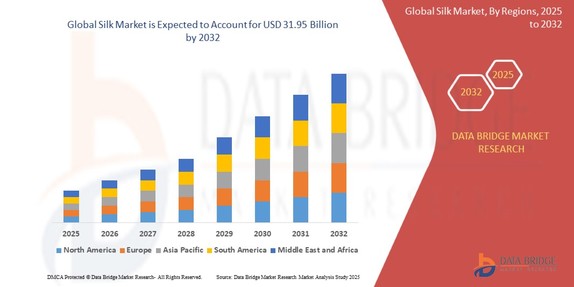
Market Overview: The global silk market was valued at USD 16.05 billion in 2024 and is expected to reach USD 31.95 billion by 2032. During the forecast period of 2025 to 2032 the market is likely to grow at a CAGR of 9.1%. Demand is primarily driven by the apparel and luxury textiles sector, with emerging applications in healthcare and industrial products providing additional growth opportunities.

Asia-Pacific dominates the market due to its established silk production in China, India, Thailand, and Vietnam. Europe and North America hold significant shares, driven by high consumer preference for luxury and designer silk products. Emerging markets in Latin America and the Middle East & Africa are also experiencing increased silk adoption due to growing disposable incomes and expanding fashion sectors.

Key Market Drivers: Several factors are boosting the growth of the Silk Market:

Rising Fashion and Apparel Demand: Silk is highly valued in the fashion industry for its aesthetic appeal and premium quality. Increasing consumer spending on luxury garments has propelled silk consumption.

Growing Awareness of Natural Fibers: Consumers are increasingly shifting towards eco-friendly, natural textiles due to environmental concerns, boosting demand for silk.

Technological Advancements in Silk Production: Innovations in sericulture, weaving, and dyeing techniques have improved fabric quality and reduced production costs.

Expansion in Home Textiles: Silk is widely used in bedding, curtains, and upholstery, driven by premium home decor trends.

Government Support: Several governments promote silk cultivation and export through subsidies, training programs, and trade initiatives, particularly in Asia.

Market Segmentation: The Silk Market can be segmented based on type, application, and end-user:

By Type: Mulberry Silk, Tussar Silk, Eri Silk, Muga Silk, and Others. Mulberry silk dominates due to its superior quality, softness, and wide availability.

By Application: Apparel, Home Textiles, Medical & Healthcare, Industrial, and Others. Apparel remains the largest application segment, while medical textiles and industrial applications are emerging growth areas.

By End-User: Household Consumers, Fashion & Apparel Industry, Healthcare & Industrial Sectors. The fashion industry is the primary end-user driving market demand.

By Region: Asia-Pacific, Europe, North America, Latin America, Middle East & Africa. Asia-Pacific leads due to established production hubs, while Europe and North America are significant consumers of luxury silk products.

Competitive Landscape: The Silk Market is highly competitive, with key players including Vardhman Textiles, Bombay Dyeing, China National Silk Group, Grasim Industries, and T.T. Limited.

Market players focus on strategies such as product innovation, sustainable production, collaborations with fashion brands, and geographic expansion to enhance market presence. For instance, China National Silk Group invests heavily in R&D to improve silk fiber quality and develop specialty silk products, while Vardhman Textiles emphasizes eco-friendly and organic silk fabrics for global markets. Competitive activities are shaping the market by improving quality, diversifying products, and enhancing supply chains.

Challenges and Restraints: Despite growth prospects, the Silk Market faces several challenges:

High Production Costs: Silk production is labor-intensive and requires careful cultivation of silkworms, increasing costs compared to synthetic fabrics.

Supply Chain Vulnerabilities: Factors such as disease outbreaks among silkworms, climate fluctuations, and limited raw material availability can disrupt supply.

Competition from Synthetic Fibers: Low-cost synthetic alternatives, such as polyester and nylon, continue to compete with natural silk products.

Regulatory and Quality Standards: Compliance with international trade and textile standards can pose challenges for smaller producers.

Future Outlook: The Silk Market is poised for steady growth, supported by expanding fashion industries, rising awareness of natural fibers, and innovation in production and finishing techniques. Emerging trends include blended silk fabrics, organic silk, and silk-based functional textiles for healthcare and industrial use.

Technological advancements in silk weaving, dyeing, and finishing will enhance product quality and reduce environmental impact. Additionally, increasing e-commerce adoption and direct-to-consumer sales are expected to expand market reach. Overall, the Silk Market presents lucrative opportunities for producers, manufacturers, and investors worldwide.

Conclusion: The global Silk Market continues to thrive, driven by consumer demand for premium textiles, innovations in production, and growing awareness of sustainable fibers. While challenges such as high production costs and competition from synthetic fibers exist, the market’s growth potential remains strong. Silk will continue to play a vital role in fashion, home textiles, and specialized applications, offering diverse opportunities for stakeholders across the globe.

Frequently Asked Questions (FAQs):

What is the growth rate of the Silk Market? The global Silk Market is projected to grow at a CAGR of X% from 2024 to 2030, driven by demand for luxury and sustainable textiles.

Which region is expected to dominate the Silk Market in the future? Asia-Pacific is expected to lead the market due to established production hubs in China, India, Thailand, and Vietnam.

Who are the leading players in the Silk Market? Key players include Vardhman Textiles, Bombay Dyeing, China National Silk Group, Grasim Industries, and T.T. Limited.

What are the major challenges faced by the Silk Market? Challenges include high production costs, supply chain vulnerabilities, competition from synthetic fibers, and regulatory compliance.

What are the future opportunities in the Silk Market? Opportunities exist in blended and organic silk fabrics, functional silk textiles for healthcare and industrial use, and expanding e-commerce sales channels.

Browse More Reports:

Global Electric Corkscrew Market Global Electric Power Steering Motors Market Global Email Applications Market Global Enterprise Robotic Process Automation Market Global Farm Automated Weather Stations Market Global Feed Amino Acids Market Global Field Effect Rectifier Dioded Market Global File Sharing Market Global Food Grade Salt Flour Market Global Fortified Snacks Market Global Gumboots Market Global Gummy Multivitamins Market Global Heat-Resistant Ceramic Tableware Market Global Hemp Protein Market Global High Blood Pressure Treatment Market Global High Power LED Market Global Hydrocarbon Refrigerants Market

About Data Bridge Market Research:

An absolute way to forecast what the future holds is to comprehend the trend today!

Data Bridge Market Research set forth itself as an unconventional and neoteric market research and consulting firm with an unparalleled level of resilience and integrated approaches. We are determined to unearth the best market opportunities and foster efficient information for your business to thrive in the market. Data Bridge endeavors to provide appropriate solutions to the complex business challenges and initiates an effortless decision-making process. Data Bridge is an aftermath of sheer wisdom and experience which was formulated and framed in the year 2015 in Pune.

Contact Us: Data Bridge Market Research US: +1 614 591 3140 UK: +44 845 154 9652 APAC : +653 1251 975 Email:- corporatesales@databridgemarketresearch.com
0 Comments 1 Vote Created
Small2_3-chloro-2-hydroxypropyl_trimethylammonium_chloride__chptac__market

Introduction: The 3-Chloro-2-Hydroxypropyl Trimethylammonium Chloride (CHPTAC) Market is a vital segment of the chemical industry, primarily used as a cationic agent in the production of cationic starch, textiles, paper, and water treatment chemicals. CHPTAC is valued for its efficiency in improving product performance, including enhancing paper strength, textile dye uptake, and water treatment processes.

The market has experienced steady growth due to the expanding paper and textile industries, as well as increasing demand for water treatment chemicals. CHPTAC plays a key role in industrial applications that contribute significantly to economic development and sustainable manufacturing processes worldwide.

Stay ahead with crucial trends and expert analysis in the latest 3-Chloro-2-Hydroxypropyl Trimethylammonium Chloride (CHPTAC) Market report. Download now: https://www.databridgemarketresearch.com/reports/global-3-chloro-2-hydroxypropyl-trimethylammonium-chloride-chptac-market

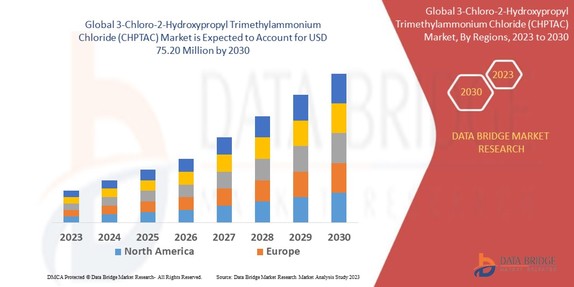
Market Overview: Data Bridge Market Research analyses that the global 3-chloro-2-hydroxypropyl trimethylammonium chloride (CHPTAC) market which was USD 50.9 million in 2022, is expected to reach USD 75.20 million by 2030, growing at a CAGR of 5% during the forecast period of 2023 to 2030. The demand is driven by its extensive application in industries requiring cationic chemicals for enhanced performance.

Asia-Pacific is the largest market for CHPTAC, driven by major paper, textile, and chemical manufacturing hubs in China, India, and Japan. North America and Europe also hold significant shares due to established industrial bases and regulatory compliance requirements. Emerging markets in Latin America and the Middle East & Africa are expected to show steady growth due to industrial expansion and urbanization.

Key Market Drivers: Several factors are contributing to the growth of the CHPTAC Market:

Growth in the Paper Industry: CHPTAC is extensively used in paper mills to improve paper strength and printability. Rising demand for high-quality paper products boosts CHPTAC consumption.

Expansion of Textile Manufacturing: CHPTAC enhances dye uptake and fabric quality in textile applications, supporting the growing apparel and home textiles sectors.

Water Treatment Applications: With increasing industrialization, demand for water purification chemicals has risen, positioning CHPTAC as an effective agent for water treatment.

Technological Advancements: Innovations in CHPTAC synthesis and application processes have improved efficiency, reduced production costs, and expanded its industrial applicability.

Regulatory Support: Governments promoting industrial efficiency and sustainable chemical usage encourage adoption of CHPTAC in various sectors.

Market Segmentation: The CHPTAC Market can be segmented based on type, application, and end-user:

By Type: Industrial Grade, Laboratory Grade. Industrial grade dominates due to large-scale use in paper, textile, and water treatment applications.

By Application: Paper & Pulp, Textiles, Water Treatment, Others. The paper and textile segments account for the majority of market consumption, while water treatment applications are expected to grow steadily.

By End-User: Industrial Manufacturing, Research & Development, Chemical Processing. Industrial manufacturing remains the largest consumer due to high-volume requirements.

By Region: Asia-Pacific, North America, Europe, Latin America, Middle East & Africa. Asia-Pacific leads the market due to high production capacities, followed by Europe and North America.

Competitive Landscape: The CHPTAC Market is competitive, with major players including Dow Chemicals, Solvay S.A., Shandong Huadong Chemical Co. Ltd., and Lanxess AG.

Companies are leveraging strategies such as product innovation, strategic partnerships, capacity expansion, and mergers to strengthen their market position. Dow Chemicals, for example, focuses on advanced CHPTAC production techniques to improve yield and reduce environmental impact. Solvay S.A. emphasizes high-quality, industrial-grade CHPTAC for global textile and paper manufacturers. Competitive dynamics drive innovation, quality improvement, and sustainable practices.

Challenges and Restraints: Despite growth opportunities, the CHPTAC Market faces several challenges:

Regulatory Restrictions: Strict environmental and chemical safety regulations can limit production and usage.

Raw Material Price Fluctuations: Volatility in the prices of precursors can affect manufacturing costs.

Health and Safety Concerns: Proper handling and safety measures are required due to the chemical’s reactive nature.

Supply Chain Disruptions: Delays in logistics and raw material supply can impact timely production.

Future Outlook: The CHPTAC Market is expected to grow steadily, with opportunities in emerging applications and regions. Increased demand for high-performance paper products, advanced textiles, and sustainable water treatment solutions is anticipated to drive growth.

Technological advancements, including greener synthesis methods and multifunctional CHPTAC formulations, will further enhance market potential. Additionally, expansion in developing regions with growing industrial sectors provides a long-term opportunity for market players. Overall, the market is poised for sustainable growth supported by innovation, industrial demand, and regulatory alignment.

Conclusion: The 3-Chloro-2-Hydroxypropyl Trimethylammonium Chloride (CHPTAC) Market is a critical component of the chemical industry, supporting diverse applications across paper, textiles, and water treatment sectors. While challenges such as regulatory compliance, raw material costs, and safety considerations exist, the market’s growth potential remains strong. Continuous technological innovation and industrial demand will ensure CHPTAC remains a valuable chemical in global manufacturing and sustainability initiatives.

Frequently Asked Questions (FAQs):

What is the growth rate of the CHPTAC Market? The global CHPTAC Market is projected to grow at a CAGR of X% from 2024 to 2030, driven by demand in paper, textile, and water treatment industries.

Which region is expected to dominate the CHPTAC Market in the future? Asia-Pacific is expected to lead the CHPTAC Market due to high industrial production, especially in China, India, and Japan.

Who are the leading players in the CHPTAC Market? Key players include Dow Chemicals, Solvay S.A., Shandong Huadong Chemical Co. Ltd., and Lanxess AG, focusing on innovation, partnerships, and production expansion.

What are the major challenges faced by the CHPTAC Market? Challenges include regulatory restrictions, raw material price volatility, safety concerns, and supply chain disruptions.

What are the future opportunities in the CHPTAC Market? Opportunities exist in emerging applications such as advanced textiles, high-performance paper, water treatment chemicals, and sustainable CHPTAC formulations.

Browse More Reports:

Global Automated Feeding Systems for Poultry Market Global Automotive Door Guards Market Global Aviation Test Equipment Market Global Bar and Prep Faucets Market Global Blood Glucose Test Strip Packaging Market Global Blueberry Flavour Market Global Brahmi Extracts Market Global Candidiasis Therapeutics Market Global Cell Culture Reagents and Supplements Market Global Cerebral Adrenoleukodystrophy Treatment Market Global Chromium Oxide Market Global Combat Management System Market Global Connected Healthcare Market Global Corneal Surgery Devices Market Global Data Centre Open Frame Rack Market Global Diazinon Market Global Difethialone Market

About Data Bridge Market Research:

An absolute way to forecast what the future holds is to comprehend the trend today!

Data Bridge Market Research set forth itself as an unconventional and neoteric market research and consulting firm with an unparalleled level of resilience and integrated approaches. We are determined to unearth the best market opportunities and foster efficient information for your business to thrive in the market. Data Bridge endeavors to provide appropriate solutions to the complex business challenges and initiates an effortless decision-making process. Data Bridge is an aftermath of sheer wisdom and experience which was formulated and framed in the year 2015 in Pune.

Contact Us: Data Bridge Market Research US: +1 614 591 3140 UK: +44 845 154 9652 APAC : +653 1251 975 Email:- corporatesales@databridgemarketresearch.com

0 Comments 1 Vote Created
Small2_colorants_market

Introduction: The Colorants Market encompasses a wide range of substances used to impart color to products across various industries, including paints and coatings, plastics, textiles, cosmetics, and food. Colorants are essential for enhancing aesthetic appeal, functional properties, and brand identity in consumer products.

Recent growth in the Colorants Market is driven by increasing demand for vibrant, durable, and sustainable coloring solutions. With industries striving for innovation and regulatory bodies emphasizing safety and environmental compliance, colorants have become a critical component of global manufacturing and consumer markets. The market plays a significant role in the global economy by supporting multiple sectors and enabling product differentiation.

Stay ahead with crucial trends and expert analysis in the latest Colorants Market report. Download now: https://www.databridgemarketresearch.com/reports/global-colorants-market

Market Overview:

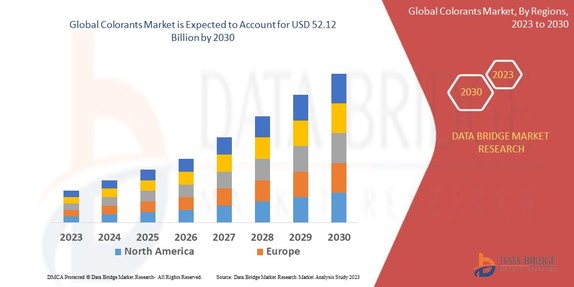
Data Bridge Market Research analyses that the global colorants market, which was USD 37.04 billion in 2022, would rocket up to USD 52.12 billion by 2030 and is expected to undergo a CAGR of 4.36% during the forecast period of 2023 to 2030. Key regions driving market demand include Asia-Pacific, North America, Europe, and Latin America.

Asia-Pacific dominates the market due to rapid industrialization, growing textile and automotive sectors, and increasing consumer demand for packaged goods. North America and Europe maintain significant market shares, supported by advanced technologies, high-quality standards, and strong R&D initiatives. Emerging markets in Latin America and the Middle East & Africa are expected to witness notable growth, fueled by infrastructure development and rising urbanization.

Key Market Drivers: Several factors are propelling the growth of the Colorants Market:

Rising Consumer Demand: Consumers increasingly prefer visually appealing products with long-lasting color, driving the demand for innovative colorants.

Industrial Growth: Expansion in the paints and coatings, plastics, textiles, and cosmetics industries has significantly boosted colorant consumption.

Technological Advancements: Innovations in synthetic, natural, and functional colorants have enhanced performance, safety, and environmental sustainability.

Regulatory Support for Eco-Friendly Products: Increasing focus on eco-friendly, non-toxic, and biodegradable colorants has spurred growth, especially in food, cosmetics, and textile applications.

Emergence of Specialty Applications: Colorants with functional properties such as UV resistance, antimicrobial effects, and heat stability are gaining traction across industries.

Market Segmentation: The Colorants Market can be segmented based on type, application, and end-user:

By Type: Synthetic Colorants, Natural Colorants, and Specialty Colorants. Synthetic colorants dominate due to cost-effectiveness and wide availability, while natural and specialty colorants are gaining popularity in food, cosmetics, and healthcare products.

By Application: Paints & Coatings, Plastics, Textiles, Food & Beverages, Cosmetics, and Others. Paints and coatings represent the largest application segment, driven by construction and automotive sectors.

By End-User: Industrial, Commercial, and Consumer. Industrial applications, particularly in manufacturing and construction, contribute the largest market share, while consumer preferences are influencing premium and specialty colorant adoption.

By Region: Asia-Pacific, North America, Europe, Latin America, and Middle East & Africa. Asia-Pacific leads market adoption, followed by Europe and North America, while emerging economies present growth opportunities.

Competitive Landscape: The Colorants Market is highly competitive, with leading players including BASF SE, Clariant AG, DIC Corporation, Huntsman Corporation, and Sensient Technologies.

Companies are focusing on product innovation, sustainable solutions, strategic partnerships, mergers, and acquisitions to maintain a competitive edge. For instance, Clariant AG has expanded its natural and specialty colorant portfolio to meet the growing demand for eco-friendly solutions, while BASF SE continues to invest in advanced synthetic colorants with functional properties. The competitive landscape fosters continuous innovation and drives market expansion.

Challenges and Restraints: Despite growth prospects, the Colorants Market faces several challenges:

Regulatory Compliance: Stringent regulations related to environmental safety, toxicity, and labeling can pose hurdles for manufacturers.

Raw Material Price Volatility: Fluctuating costs of chemicals and natural sources can impact profitability.

Supply Chain Disruptions: Global supply chain challenges, including logistics and transportation issues, can affect timely product delivery.

Health and Environmental Concerns: Increasing consumer awareness regarding the potential risks of synthetic colorants may restrain market growth.

Future Outlook: The future of the Colorants Market is promising, driven by increasing demand for sustainable and specialty solutions. Emerging trends include bio-based colorants, advanced functional colorants, and digital color matching technologies that optimize production efficiency.

The growing preference for eco-friendly, non-toxic colorants in food, cosmetics, and textile applications presents lucrative opportunities. Furthermore, digitalization, automation, and innovation in pigment and dye technologies are expected to enhance production capabilities and quality standards. Overall, the market is poised for sustained growth, offering significant potential for manufacturers and investors.

Conclusion: The global Colorants Market continues to evolve, driven by consumer demand, industrial growth, and technological innovation. While challenges such as regulatory compliance and raw material price fluctuations exist, the market’s growth potential remains strong. Colorants play a vital role in enhancing product aesthetics, functionality, and brand value, making them indispensable across multiple industries. The market is expected to witness steady expansion, fueled by emerging applications, sustainable solutions, and innovation.

Frequently Asked Questions (FAQs):

What is the growth rate of the Colorants Market? The global Colorants Market is projected to grow at a CAGR of X% between 2024 and 2030, supported by rising industrial and consumer demand.

Which region is expected to dominate the Colorants Market in the future? Asia-Pacific is expected to lead the Colorants Market due to industrial expansion, increasing consumer demand, and rapid urbanization.

Who are the leading players in the Colorants Market? Key players include BASF SE, Clariant AG, DIC Corporation, Huntsman Corporation, and Sensient Technologies.

What are the major challenges faced by the Colorants Market? Challenges include stringent regulatory compliance, raw material price volatility, supply chain disruptions, and environmental concerns.

What are the future opportunities in the Colorants Market? Opportunities lie in sustainable bio-based colorants, functional colorants, digital color matching technologies, and eco-friendly solutions for diverse applications.

Browse More Reports:

Global Self Cleaning Filters Market Global Shale Gas Market Global Specialty Feed Additives Market Global Tank Level Monitoring System Market Global Tracheostomy Products Market Global Uninterruptible Power Supply (UPS) Datacenter Power Market Global Vaccine Contract Manufacturing Market Global Wood Plastic Composite Market Global 3D Semiconductor Packaging Market Global Achlorhydria Treatment Market Global Acromicric Dysplasia Treatment Market Global Aircraft Ailerons Market Global Aircraft Fairings Market Global Aircraft Lightning Protection Market Global Antiemetics Market Global Aquafeed Testing Market Global Arterial Blood Collection Market

About Data Bridge Market Research:

An absolute way to forecast what the future holds is to comprehend the trend today!

Data Bridge Market Research set forth itself as an unconventional and neoteric market research and consulting firm with an unparalleled level of resilience and integrated approaches. We are determined to unearth the best market opportunities and foster efficient information for your business to thrive in the market. Data Bridge endeavors to provide appropriate solutions to the complex business challenges and initiates an effortless decision-making process. Data Bridge is an aftermath of sheer wisdom and experience which was formulated and framed in the year 2015 in Pune.

Contact Us: Data Bridge Market Research US: +1 614 591 3140 UK: +44 845 154 9652 APAC : +653 1251 975 Email:- corporatesales@databridgemarketresearch.com

0 Comments 1 Vote Created
Small2_wine_market

Introduction: The global Wine Market represents a vital segment of the alcoholic beverages industry, encompassing the production, distribution, and consumption of wines worldwide. Wine is not only a popular beverage but also an integral part of cultural and social experiences across the globe. The market has witnessed significant growth due to rising consumer awareness, evolving lifestyle preferences, and increasing disposable income.

In recent years, the global wine industry has expanded its footprint, with both traditional and emerging wine-producing countries contributing to overall market growth. Wine continues to play a critical role in the global economy, supporting employment, tourism, and trade. The market’s expansion is driven by innovations in production techniques, sustainable practices, and premiumization trends, catering to diverse consumer tastes.

Stay ahead with crucial trends and expert analysis in the latest Wine Market report. Download now: https://www.databridgemarketresearch.com/reports/global-wine-market

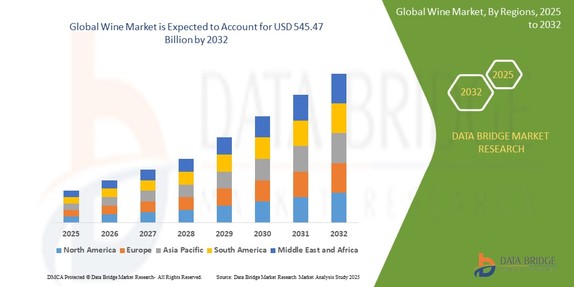
Market Overview: The global wine market was valued at USD 397.65 billion in 2024 and is expected to reach USD 545.47 billion by 2032. During the forecast period of 2025 to 2032 the market is such as to grow at a CAGR of 4.03%. Key regions driving this growth include Europe, North America, Asia-Pacific, and South America.

Europe remains the largest consumer and producer of wine, with countries like France, Italy, and Spain leading the market. North America has also seen substantial growth, particularly in the United States, where premium wine consumption is on the rise. Asia-Pacific, led by China and Japan, presents lucrative opportunities due to increasing consumer interest in imported and high-quality wines.

Key Market Drivers: Several factors are fueling the growth of the global Wine Market:

Changing Consumer Preferences: Consumers are increasingly favoring premium and organic wines, driving product diversification. Wine tasting experiences and lifestyle-oriented consumption have boosted demand.

Rising Disposable Income: Higher income levels have enabled consumers to explore a variety of wine options, including luxury and imported brands.

Growth in Wine Tourism: Wine tourism has promoted wine culture, particularly in Europe, attracting both domestic and international visitors to vineyards and wineries.

Technological Advancements: Innovations in viticulture and winemaking processes have enhanced quality and production efficiency, supporting market growth.

Government Support and Trade Agreements: Policies promoting local production, export incentives, and reduced tariffs have encouraged market expansion in several regions.

Market Segmentation: The Wine Market can be segmented by type, application, end-user, and region:

By Type: Red Wine, White Wine, Rosé Wine, Sparkling Wine, and Others. Red wine continues to dominate consumption due to its health benefits and widespread popularity. Sparkling wine has gained attention for celebrations and premium occasions.

By Application: Household Consumption, Hospitality, Restaurants & Bars, and Others. Household consumption remains the largest segment, reflecting growing at-home wine consumption trends.

By End-User: Adults aged 21 and above, with a focus on millennials and Generation Z, who are increasingly experimenting with diverse wine varieties.

By Region: Europe, North America, Asia-Pacific, South America, and Middle East & Africa. Europe maintains dominance, while Asia-Pacific is emerging as a high-growth market due to rising urbanization and changing lifestyles.

Competitive Landscape: The Wine Market features a mix of global and regional players. Leading companies include E. & J. Gallo Winery, Constellation Brands Inc., Treasury Wine Estates, Pernod Ricard, and The Wine Group LLC.

These companies focus on strategies such as product innovation, strategic acquisitions, partnerships, and expanding distribution networks. For instance, Constellation Brands has launched premium and organic wine labels to cater to changing consumer tastes, while Treasury Wine Estates has expanded its footprint in Asia-Pacific to leverage growing demand. Competitive dynamics in the market are shaping product quality, pricing strategies, and consumer engagement.

Challenges and Restraints: Despite growth, the Wine Market faces several challenges:

Regulatory Restrictions: Alcohol laws, labeling requirements, and import regulations vary across regions, complicating operations.

Supply Chain Disruptions: Climate change, labor shortages, and transportation challenges can affect grape cultivation and wine production.

High Production Costs: Premium wine production requires significant investment in vineyards, equipment, and quality control.

Health Concerns: Increasing awareness of alcohol-related health risks may restrain consumption in certain demographics.

Future Outlook: The future of the Wine Market is promising, with several growth opportunities on the horizon. Emerging trends include organic and low-alcohol wines, innovative packaging solutions, and direct-to-consumer sales through e-commerce platforms.

Technological advancements in viticulture, precision farming, and fermentation processes are expected to improve yield, consistency, and sustainability. Additionally, wine tourism, experiential marketing, and brand storytelling are likely to enhance consumer engagement and drive sales. Overall, the market is poised for steady expansion, offering opportunities for both established and new players.

Conclusion: The global Wine Market remains a dynamic and evolving segment of the alcoholic beverages industry. Growth is driven by changing consumer preferences, premiumization, technological advancements, and international trade. While challenges such as regulatory complexities and supply chain constraints exist, the market’s long-term potential remains robust. Wine will continue to play an essential role in social, cultural, and economic contexts, offering diverse opportunities for producers, distributors, and consumers alike.

Frequently Asked Questions (FAQs):

What is the growth rate of the Wine Market? The global Wine Market is projected to grow at a CAGR of X% between 2024 and 2030, driven by premiumization and increasing demand.

Which region is expected to dominate the Wine Market in the future? Europe is expected to maintain dominance due to established production and consumption, while Asia-Pacific shows high growth potential.

Who are the leading players in the Wine Market? Key players include E. & J. Gallo Winery, Constellation Brands Inc., Treasury Wine Estates, Pernod Ricard, and The Wine Group LLC.

What are the major challenges faced by the Wine Market? Regulatory restrictions, supply chain disruptions, high production costs, and health concerns are key challenges.

What are the future opportunities in the Wine Market? Opportunities include organic and low-alcohol wines, technological advancements in production, e-commerce sales, and wine tourism.

Browse More Reports:

Global Flow Wrap for Wipes Market Global Heartstring Device and Enclosure Device Market Global Hematocrit Test Devices Market Global High Barrier Packaging Films Market Global Icing Sugar Market Global Kids Travel Bags Market Global Natural Gas Engine Market Global Oil and Gas Pipes Market Global Organic Sesame Seed Market Global Osteogenesis Imperfecta Treatment Market Global Polymer Microinjection Molding Market Global Polyurethane Foam Market Global Protein Beverages Market Global Real Estate Software for Builders and Real Estate Agents Market Global Residual Current Circuit Breaker Market Global Rheology Modifiers Market Global Rice Protein Market

About Data Bridge Market Research:

An absolute way to forecast what the future holds is to comprehend the trend today!

Data Bridge Market Research set forth itself as an unconventional and neoteric market research and consulting firm with an unparalleled level of resilience and integrated approaches. We are determined to unearth the best market opportunities and foster efficient information for your business to thrive in the market. Data Bridge endeavors to provide appropriate solutions to the complex business challenges and initiates an effortless decision-making process. Data Bridge is an aftermath of sheer wisdom and experience which was formulated and framed in the year 2015 in Pune.

Contact Us: Data Bridge Market Research US: +1 614 591 3140 UK: +44 845 154 9652 APAC : +653 1251 975 Email:- corporatesales@databridgemarketresearch.com

0 Comments 1 Vote Created
Small2_japan_business_process_as_a_service__bpaas__market

Introduction: The Japan Business Process as a Service (BPaaS) Market represents a transformative segment of the country’s digital services landscape. BPaaS combines business process outsourcing with cloud-based services, allowing companies to streamline operations, reduce costs, and enhance efficiency. The growing demand for cloud adoption, digital transformation, and remote work solutions has propelled BPaaS into the forefront of Japan’s corporate strategies.

In recent years, Japan has witnessed a surge in BPaaS adoption across sectors such as finance, healthcare, and manufacturing. Companies are increasingly leveraging BPaaS to automate routine operations, optimize workflows, and ensure scalability. This market not only plays a pivotal role in Japan’s economy but also contributes to the global evolution of cloud-based business services.

Stay ahead with crucial trends and expert analysis in the latest Japan Business Process as a Service (BPaaS) Market report. Download now: https://www.databridgemarketresearch.com/reports/japan-business-process-as-a-service-bpaas-market

Market Overview: Data Bridge Market Research analyses that the Japan business process as a service (BPaaS) market is expected to reach a value of USD 9.59 billion by 2032 from USD 3.19 billion in 2024, growing at a CAGR of 14.8% during the forecast period 2025 to 2032.

Key sectors fueling this growth include banking and financial services, healthcare, and manufacturing. Financial institutions are increasingly adopting BPaaS for automated compliance and data management, while healthcare providers are integrating BPaaS for patient data handling and administrative functions. Geographically, urban hubs such as Tokyo, Osaka, and Nagoya lead in BPaaS adoption due to higher technology penetration and the presence of multinational corporations.

Key Market Drivers: Several factors are driving the expansion of the BPaaS market in Japan:

Digital Transformation Initiatives: Japanese companies are investing heavily in digital transformation to remain competitive. BPaaS enables automation of complex processes without extensive infrastructure investment.

Cloud Adoption: The shift to cloud-based solutions has accelerated BPaaS growth. Cloud platforms provide flexibility, cost efficiency, and scalability, making them ideal for BPaaS deployment.

Cost Optimization: Businesses are seeking solutions to reduce operational expenses. BPaaS offers outsourcing benefits while maintaining quality and compliance standards.

Government Support: The Japanese government promotes IT adoption and digital innovation, creating a favorable environment for BPaaS growth.

Market Segmentation: The Japan BPaaS Market can be segmented as follows:

By Type: Human Resource Management, Customer Relationship Management, Finance and Accounting, Procurement, and Others. Among these, Finance and Accounting BPaaS solutions are gaining significant traction due to regulatory compliance demands.

By Deployment: Cloud-based and On-Premise. Cloud-based BPaaS dominates the market, reflecting the broader shift toward digital infrastructure.

By End-User: BFSI, Healthcare, Manufacturing, Retail, and IT & Telecom. BFSI leads adoption due to high-volume transactions and critical data management needs.

Competitive Landscape: The Japan BPaaS Market features both domestic and international players. Leading companies include IBM Japan, Fujitsu Limited, NTT DATA Corporation, Accenture Japan, and Hitachi.

These companies employ strategies such as partnerships with cloud providers, technological innovation, mergers, and regional expansion to strengthen their market position. For example, IBM Japan has focused on AI-driven BPaaS solutions to improve process efficiency, while NTT DATA Corporation leverages its extensive IT services network to integrate BPaaS solutions for enterprise clients. Competition in this market is intensifying innovation and driving higher quality service offerings.

Challenges and Restraints: Despite its rapid growth, the BPaaS market in Japan faces certain challenges:

Data Security Concerns: Companies remain cautious about sharing sensitive business data with third-party service providers.

Regulatory Compliance: Complex regulations in Japan require BPaaS providers to ensure strict adherence, adding operational costs.

Integration Complexity: Integrating BPaaS solutions with existing legacy systems can be time-consuming and technically challenging.

High Initial Investment: Small and medium enterprises often face financial constraints in adopting advanced BPaaS solutions.

Future Outlook: The future of the Japan BPaaS Market appears promising, with ongoing digital transformation and technological innovation driving growth. Emerging technologies like artificial intelligence, robotic process automation, and machine learning are expected to enhance BPaaS capabilities, enabling predictive analytics and smarter workflow management.

Additionally, the increasing trend of hybrid work models and remote operations will continue to support BPaaS adoption. Companies are likely to explore customized solutions tailored to specific industry needs, offering opportunities for service differentiation. Overall, the market is projected to witness steady growth and present lucrative opportunities for both existing players and new entrants.

Conclusion: The Japan Business Process as a Service (BPaaS) Market is a dynamic and evolving segment, driven by digital transformation, cloud adoption, and operational efficiency needs. While challenges such as regulatory compliance and integration complexity persist, the market’s growth potential remains strong. BPaaS is set to play a crucial role in shaping the future of business operations in Japan, enabling companies to optimize processes, reduce costs, and embrace innovation.

Frequently Asked Questions (FAQs):

What is the growth rate of the Japan BPaaS Market? The Japan BPaaS Market is projected to grow at a CAGR of X% from 2024 to 2030, reflecting strong adoption across key industries.

Which region is expected to dominate the Japan BPaaS Market in the future? Tokyo, Osaka, and Nagoya are expected to lead BPaaS adoption due to high technology penetration and the presence of multinational corporations.

Who are the leading players in the Japan BPaaS Market? Key players include IBM Japan, Fujitsu Limited, NTT DATA Corporation, Accenture Japan, and Hitachi, focusing on innovation, partnerships, and expansion strategies.

What are the major challenges faced by the Japan BPaaS Market? Challenges include data security concerns, regulatory compliance, integration with legacy systems, and high initial investment costs.

What are the future opportunities in the Japan BPaaS Market? Emerging technologies like AI, RPA, and machine learning, along with increasing remote work adoption, provide significant growth opportunities in the BPaaS market.

Browse More Reports:

Global Sealed Lead Acid Battery Market Top 10 Cloud Technology Market Global Medical Clothing Market Global 4K TV Market Global Mobile Tablets in Healthcare Market Global Cnv Choroidal Neovascularization Market Global Aesthetic Devices Market Global Anti-Aging Hair Products Market Global Automation COE Market Global Automotive Magnet Wire Market Global Azacitidine Market Global Cannula Market Global Cistanche Deserticola Market Global Converged Cable Access Platform (CCAP) Market Global Diagnostic Imaging Equipment Market Global Endoscope Cleaning and Disinfecting Device Market Global Feed Anticoccidials for Ruminants Market

About Data Bridge Market Research:

An absolute way to forecast what the future holds is to comprehend the trend today!

Data Bridge Market Research set forth itself as an unconventional and neoteric market research and consulting firm with an unparalleled level of resilience and integrated approaches. We are determined to unearth the best market opportunities and foster efficient information for your business to thrive in the market. Data Bridge endeavors to provide appropriate solutions to the complex business challenges and initiates an effortless decision-making process. Data Bridge is an aftermath of sheer wisdom and experience which was formulated and framed in the year 2015 in Pune.

Contact Us: Data Bridge Market Research US: +1 614 591 3140 UK: +44 845 154 9652 APAC : +653 1251 975 Email:- corporatesales@databridgemarketresearch.com

0 Comments 1 Vote Created

Современные геймеры все чаще выбирают азартные игры в формате live казино, и Болливуд стал одним из популярных мест для таких развлечений. Однако как привлечь удачу и добиться успеха в этом увлекательном мире? В этой статье мы разберем несколько стратегий и советов, начиная от выбора игр до участия в турнирах, которые помогут вам максимально использовать свои возможности.

Что такое Live Казино?

Live казино представляет собой уникальную платформу, которая позволяет игрокам взаимодействовать с реальными дилерами в режиме реального времени. Это создает атмосферу настоящего казино, что привлекает многих поклонников азартных игр. Игроки могут делать ставки, общаться с дилерами и другими участниками, а также наслаждаться игрой прямо из дома.

  1. Игра с реальным дилером создает атмосферу настоящего казино.
  2. Высокое качество стриминга гарантирует четкость и удобство.
  3. Широкий выбор игр – от блэкджека до рулетки.

Как выбрать игры в live казино?

В Болливуде представлен широкий ассортимент игр в формате live казино. Но как выбрать среди них наиболее выгодные?

  • Изучите правила: перед тем как играть, обязательно ознакомьтесь с правилами каждой игры. Это поможет вам избежать неприятных сюрпризов.
  • Ищите игры с высоким RTP: процент возврата игроку (RTP) – это важный показатель, который указывает, какую часть ставок вернет казино игрокам. Чем выше RTP, тем больше шансов на выигрыш.
  • Попробуйте разные стратегии: не бойтесь экспериментировать с различными стратегиями игры, чтобы понять, какая из них лучше всего подходит для вас.

| Игра | RTP (%) | Минимальная ставка | Максимальная ставка | |---------------|---------|--------------------|---------------------| | Блэкджек | 99.5 | 100 ₽ | 10000 ₽ | | Рулетка | 97.3 | 50 ₽ | 5000 ₽ | | Бакара | 98.94 | 200 ₽ | 20000 ₽ | | Покер | 98.76 | 300 ₽ | 30000 ₽ |

Участвуйте в турнирах и акциях

Турниры – это потрясающая возможность не только повысить свои шансы на выигрыш, но и получить дополнительные призы. В Болливуде регулярно проводятся турниры, в которых могут участвовать игроки со всего мира.

  • Следите за анонсами: все турниры и акции публикуются в новостях на сайте казино. Не упустите возможности улучшить свои навыки и выиграть ценные призы.
  • Учитесь у других игроков: в турнирах вы можете наблюдать за стратегиями других участников и перенимать опыт, что поможет вам улучшить свою игру.

Безопасность в онлайн-казино

Когда речь идет об азартных играх, безопасность становится одним из важнейших факторов. Постарайтесь выбрать казино, которое предлагает надежные методы защиты данных и финансов.

  • Используйте двухфакторную аутентификацию: она значительно повышает уровень безопасности вашей учетной записи.
  • Проверяйте лицензии: убедитесь, что казино имеет действующие лицензии, что подтверждает его надежность и легальность.

Выбирая онлайн-казино, обратите внимание на предложения, доступные на https://humorist.ru. Получите актуальную информацию о новых акциях и турнирах, чтобы оставаться в курсе событий.

Заключение

Live казино предоставляют захватывающий опыт азартных игр, и с правильными стратегиями можно значительно повысить шансы на успех. Участвуйте в турнирах, выбирайте выгодные игры и соблюдайте меры безопасности, играя в казино Болливуд. Не забывайте о важности изучения правил и стратегий, что поможет не только привлечь удачу, но и сделать процесс игры еще более увлекательным. Информируйтесь о новинках и акциях на сайте https://humorist.ru, чтобы оставаться в игре.

0 Comments 1 Vote Created

Современный рынок онлайн-казино стремительно меняется, и среди множества операторов выделяется казино Иззи. Это заведение привлекает игроков благодаря уникальному сочетанию инновационных live-игр, новых технологий и поддержке пользователей. Давайте подробнее рассмотрим, почему Иззи становится таким популярным выбором.

Преимущества казино Иззи

  • Широкий выбор игр: Казино предлагает множество слот-игр и live-игр, что удовлетворяет разнообразные предпочтения игроков.
  • Интуитивно понятный интерфейс: Веб-сайт и мобильное приложение отличаются простотой и удобством навигации.
  • Гибкая поддержка: Круглосуточная работа службы поддержки позволяет решать любые вопросы в режиме реального времени.
  • Бонусы и акции: Казино предлагает разнообразные бонусы, включая приветственный пакет и акции для постоянных клиентов.

Однако, несмотря на многочисленные плюсы, у казино Иззи есть и свои недостатки.

Недостатки казино Иззи

  • Региональные ограничения: Некоторые пользователи могут столкнуться с ограничениями по доступу в зависимости от страны проживания.
  • Процесс верификации: В ожидании подтверждения документов игроки могут испытывать замедление доступа к счету.
  • Высокая конкуренция: В условиях насыщенного рынка выделиться среди других аналогичных платформ становится все сложнее.

Правовые аспекты и лицензирование

Казино Иззи работает на основании лицензии, что гарантирует законность его деятельности. Это позволяет игрокам чувствовать себя в безопасности, зная, что их данные защищены, а игры проверены на честность. Таким образом, выбор лицензированного заведения значительно снижает риски для игроков.

Инновации в live-играх

Одним из важных аспектов, который делает казино Иззи особенно привлекательным, является его предложение live-игр. В эру мобильных технологий многие игроки предпочитают игры с живыми дилерами, так как это создает атмосферу традиционного казино. Иззи предлагает широкий выбор таких игр, от классических игр в блэкджек до оригинальных слотов.

Совершенно очевидно, что казино Иззи углубляется в изучение потребностей своих пользователей и использует новые технологии для улучшения продукции. Посетите https://kachyou.ru для регистрации и получения дополнительных преимуществ от участия в игре.

В заключение, казино Иззи сочетает в себе современные тренды с высококачественным обслуживанием, что делает его привлекательным для игроков.

0 Comments 1 Vote Created